Community is Infra: Radical Humility and Parallel Futures
The real stress test for the future isn't the tech; it was the humans building it
G IRL

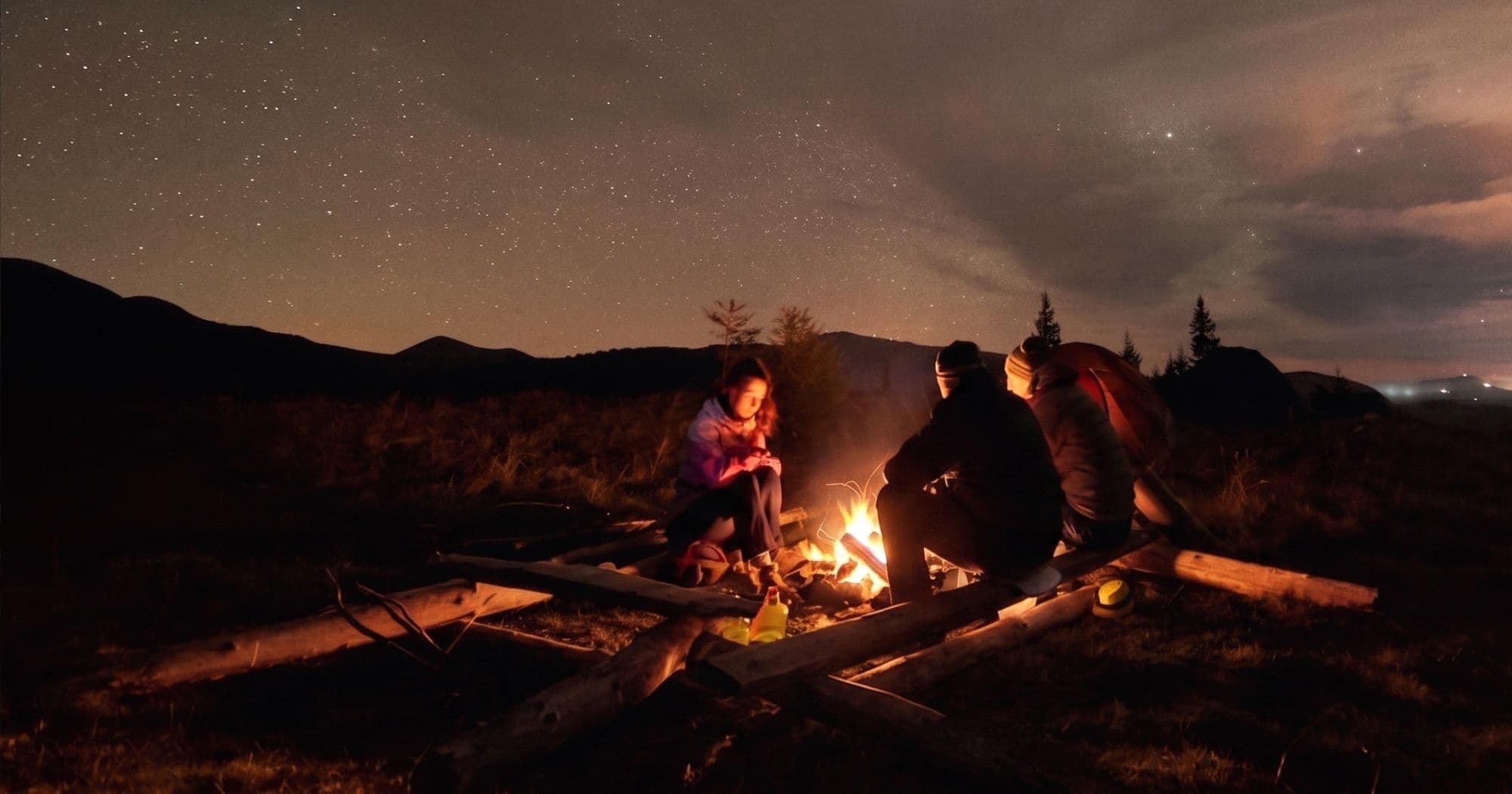
There’s a moment that happens in meaningful spaces, usually somewhere after the introductions and before the late-night philosophical spiral kicks in, when people stop performing quite so hard and settle back into themselves. Shoulders drop. The room exhales. Everyone becomes human again.
That’s the bit a G IRL like me is interested in.
Not the optics of community; the mechanics of it.
The invisible architecture underneath the more tangible one, the culture.
Working across survivor advocacy, education, safeguarding, media, and culture building, I’ve realised the thing I care about most is not simply creating spaces people enter. It’s building communities where people can remain inside without slowly losing themselves.
I believe the future is not only coded in software, but in behaviour, language, governance, and the quality of human relationships.
Alongside all the conversations about sovereignty, decentralisation, privacy, governance, and rebuilding society from the ground up, I find myself paying attention to something evolving in parallel: the social infrastructure.
How tension travels through a room.
Who speaks freely versus who rehearses every sentence before saying it aloud.
The emotional labour of interpretation, mediation, and contextualisation falling, as it so often does, onto the same people.
Credibility arriving instantly for some, while others are required to earn it repeatedly before the room fully listens.
That tells you more about a community than any manifesto ever will.
For me, the foundation of strong communities is not necessarily marketable, but it is absolutely fundamental: radical humility.
People are human.
People are learning.
People will get things wrong.
I don’t mean deliberately derailing proceedings. I refer to the ordinary fumbling that comes with trying to grow beyond inherited systems, social conditioning, and ways of relating we were never properly taught to consider, let alone practise well.
I think many people genuinely want to build differently now. You can feel it. A desire to build from ethical foundations and those foundations continuing to support end products. A hunger for spaces with more honesty, curiosity, emotional intelligence, and room to question inherited structures without immediately spiralling into fear every time somebody expresses an alternative opinion or shares one clumsily.
Because the community cannot deepen if everyone is terrified of participation.
Disagreement should sharpen thinking rather than fracture connection.
People should be able to contribute without shrinking themselves to fit the room.
Emotional safety and intellectual rigour are not opposites. In healthy spaces, they strengthen one another.
Somewhere along the way, public discourse became less about understanding and the pursuit of truth and more about learning to manage perception. Certainty became social currency, while curiosity began to look dangerous.
Thoughtful communities are not built on perfection.
They are built through repair. Through reflection.
Through people developing enough trust in themselves to stay inside uncomfortable conversations long enough to learn something from them.
That, to me, is where culture work begins.
I’ve worked inside organisations, schools, media spaces, and communities, observing the dynamics operating underneath what’s actually being said aloud. The body language. The emotional temperature. The subtle moments where inclusion fractures long before policy notices anything is wrong.
A room operating from fear has a texture to it.
Questions dry up.
Humour tightens.
People begin speaking in approved language rather than honestly.
Participation narrows into performance.
And ironically, many spaces trying to “build the future” accidentally recreate the exact systems people were hoping to escape in the first place.
Extraction repackaged as innovation.
Burnout disguised as passion.
Communities speaking the language of freedom while unintentionally defaulting to hierarchies nobody consciously agreed to.
Meanwhile, the emotional scaffolding holding those spaces together is usually carried by facilitators, carers, educators, moderators, and community stewards, translating between worlds so everyone else can keep moving. Essential work. Rarely treated as infrastructure. Almost never valued like technical labour, despite preventing collapse half the time.
We believe sovereign systems cannot be built from cultures that are extractive, performative, coercive, unsafe, or disconnected from human reality.
Because privacy alone is not enough.
Decentralisation without care fragments people faster.
Freedom without integrity eventually mutates into domination.
Innovation without ethics becomes repetition wearing futuristic branding.
And that’s the question sitting, rarely acknowledged, underneath so much technological optimism right now... What kind of humans do we need to become to sustain the systems we claim we want?
Because if sovereignty only exists technically, it eventually fails socially.
You can build extraordinary decentralised infrastructure, but if the people inside those systems cannot navigate disagreement, tolerate uncertainty, communicate through tension, or repair trust after rupture, the architecture eventually mirrors the same fractures we were trying to move beyond.
Which is why I keep returning to social infrastructure as serious strategic work rather than soft extras orbiting the “real” build.
If it isn’t resilient, sustainable ecosystems capable of surviving complexity without imploding, then what exactly are we building?
And that social infrastructure must underpin our tech ecosystems if they are to be sustainable.
We have to start from an understanding that none of us is fully finished.
That intelligence is not immunity from blind spots.
That growth requires surrendering to our egos.
Not mastery over them.
We must maintain the integrity to keep working as a unit honestly while building something larger than its individual parts.
If we are serious about building new worlds, then their cultural foundations must be as intentional as the code itself.
Because the real stress test for any future system will never be the technology.
It will be the humans attempting to live beside one another within it.
In the end, societies rarely collapse from a lack of innovation. They collapse from the failure of relationships.
The real challenge is not whether we can build new systems. It's about committing to sustaining them ethically. Radical humility throughout the stack. These are the foundations from which we must build any parallel future.
This community submitted article was written by Logos Circle: Porto steward G IRL. G IRL urgently needs developer support to help build an egress app for domestic abuse survivors. Learn more and help victims.
Want to contribute to Logos Press Engine like G IRL? Drop us a proposal, and we'll help you with editorial support.
Discussion
G IRL
Community
Mariana Carmona
JosiahWarren
Community
G IRL
Community